Cheerleading Risk Assessment: What Should Clubs Include?
Risk assessments probably aren’t the reason you got involved in cheerleading.
Training athletes, building a great team and finally seeing a stunt hit after weeks of practice? Much more exciting.
But whether you run a small recreational club or coach competitive squads, keeping on top of risk is part of running a successful cheer programme, and a cheerleading risk assessment doesn’t need to be a huge, complicated document. At its simplest, it’s about taking a proper look at what happens at your club, spotting where someone could get hurt and deciding what you can reasonably do to reduce that risk.
With athletes tumbling, jumping, lifting and quite literally throwing each other into the air, there are a few things worth thinking about.
The UK Cheerleading Association have a ready-made risk assessment template available for use, so you have a starting point. Click here to visit the page and download the form.
What is a cheerleading risk assessment?
A risk assessment is essentially asks:
What could go wrong, who could be affected, and what are we doing about it?
For a cheerleading club, that means looking at everything from stunts and tumbling to your mats, coaching arrangements, and training venue.
The important thing is to make it specific to your club and not use general assumptions.
A junior recreational squad learning foundational skills isn’t going to have exactly the same risk profile as a senior competitive team working on advanced tumbling and pyramids.

What should a cheerleading risk assessment include?
Every club is different, but there are some obvious places to start.
1. Stunts and pyramids
When athletes are lifting, catching and supporting one another, there’s naturally plenty to consider due to the high risk of these activities.
Rather than simply putting “stunting – risk of injury” on your assessment, dig a little deeper.
Think about things like:
- How difficult is the stunt?
- Do the athletes have the experience needed to attempt it?
- Have they worked through the appropriate progressions?
- Is suitable spotting being used where required?
- Is there enough space around the stunt group?
- Is the training surface suitable?
- Is the group being appropriately supervised?
2. Tumbling
Tumbling is another big area to consider in a cheerleading risk assessment and again, similar to stunts, the context matters.
An athlete working on a forward roll presents a very different set of considerations from someone practising a more advanced tumbling pass. Think about the skill being attempted, the athlete’s experience, the surface they’re using and the space available.
3. Mats and equipment
Mats get a lot of use in a busy cheerleading club, so that makes them worth checking regularly rather than assuming they’re fine because they were fine last month.
Take a look at:
- The overall condition of your mats
- Any obvious damage or deterioration
- How they’re positioned
- Gaps between sections
- Whether they’re suitable for the activity taking place
- How they’re moved and stored
The same applies to any other training equipment your club uses. A simple routine for checking equipment and reporting problems can help prevent damaged kit from quietly staying in circulation and causing any incidents or unnecessary risks.
4. Your training space
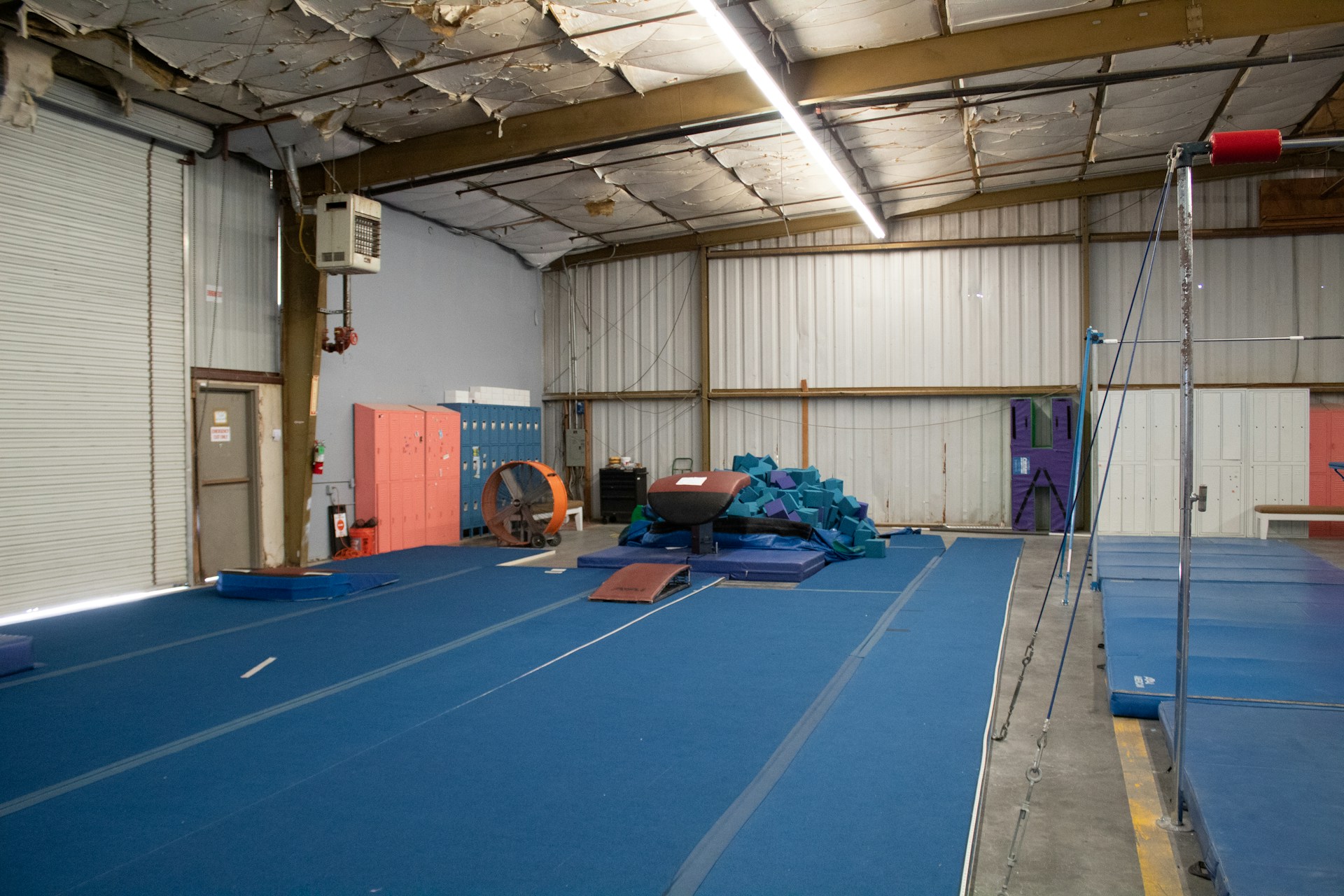
You can have experienced coaches and sensible athletes and still have problems if the environment itself isn’t suitable.
Walk around your training venue and look at it with fresh eyes at factors such how much space do you actually have? Is the ceiling high enough for the activities taking place? Are there pillars, walls, benches or other obstacles nearby? Is the floor appropriate? Are entrances and emergency exits clear?
Additionally, if you share the venue with other clubs or activities, think about that too.
5. Coaching and supervision
Great coaching isn’t just about teaching athletes how to hit their skills but also ensuring a safe environment and assessing whether your students are technically able to complete what you are asking of them.
Think about how many athletes are training at once, their ages and abilities, what they’re practising and how many coaches are available. For example, a session involving several groups working on advanced skills may need a different approach from a beginner session focused on fundamentals.
It’s also worth considering what happens when several activities are taking place simultaneously. Can all coaches see what’s happening? Is there enough separation between groups? Does everyone know which areas of the floor they should be using?
A little organisation can make a big difference and reduce risk.
6. The athletes themselves
It’s easy to assess a skill and forget about the person performing it. But two athletes attempting the same skill won’t necessarily have the same level of risk.
Experience, ability, age and progression can all matter.
A useful question for coaches is:
Is this skill appropriate for this athlete at this point in their development?
Progression is part of cheerleading. Athletes want to learn new skills and coaches want to help them get there. The key is making sure progression is sensible rather than rushing to the end result.
7. First aid and emergencies
Nobody wants an accident to happen, but if it does, that’s not the moment to start working out what everyone is supposed to do. Your cheerleading club risk assessment should therefore look beyond preventing accidents and consider how you’ll respond to them in the case they do happen.
Questions worth asking include:
- What first-aid arrangements are available?
- Who knows what to do in an emergency?
- Where is the relevant emergency information kept?
- How would you contact parents or guardians if necessary?
- Can emergency services access the venue easily?
- How are accidents and incidents recorded?
Most importantly, make sure the relevant people actually know the answers.
An emergency plan isn’t particularly useful if it’s sitting unread in a folder without the necessary people being aware or trained on how to act when the situation arises.
8. Competitions and events
Competition day brings excitement, nerves, and a completely different environment from your usual training session. You’re potentially dealing with an unfamiliar venue, different flooring, warm-up areas, crowds, travel and a busy timetable.
That’s why it’s worth considering whether your normal training assessment adequately covers what’s happening. Before attending a competition or performance, think about what will be different.
Where will athletes warm up? What equipment is available? Who is responsible for supervising different groups? What happens if someone is injured away from your normal venue?
The goal isn’t to create paperwork for every possible scenario. It’s simply to make sure unfamiliar surroundings don’t introduce risks you’ve never considered.
You may find that when attending different venues, they will typically ask for a risk assessment to be completed.
How do you actually carry out a cheerleading risk assessment?
If you’ve never completed one before, don’t overcomplicate it, start by walking through a normal session.
Watch what’s happening and ask yourself:
What could cause someone harm?
Then consider who could be affected. Athletes are the obvious answer, but coaches, volunteers, parents, spectators and visitors could be relevant too.
Next, look at what you’re already doing to manage each risk.
You might find that you’ve already got sensible measures in place. If not, think about what else could reasonably be done.
Record your findings, make sure the relevant people understand them and put any actions into practice.
That’s much more useful than producing a beautifully formatted risk assessment that nobody looks at again.
Don’t forget to review it
Your cheerleading club isn’t going to stay exactly the same forever.
Athletes progress. New equipment arrives. Coaches change. Squads grow. You might move venues or start entering different competitions.
Your risk assessment needs to keep up.
It’s particularly worth revisiting after things such as:
- Moving to a new venue
- Introducing new equipment
- Changing your training setup
- Introducing new activities
- Significant changes to a squad
- An accident, incident or near miss
A near miss can be particularly useful.
If everyone walks away unharmed but you’re left thinking, “That could have gone very differently,” don’t simply forget about it. It’s an opportunity to look at what happened and decide whether anything needs to change.
Common cheerleading risk assessment mistakes
One of the biggest mistakes is making the assessment too generic. If your risk assessment could belong to a football club, dance school, gymnastics centre or cheerleading club simply by changing the organisation’s name at the top, it probably isn’t specific enough.
Another is focusing entirely on dramatic accidents.
Yes, you need to consider stunts and tumbling. But also look at the everyday stuff: damaged equipment, cluttered training spaces, unsuitable surfaces and unclear procedures.
And finally, don’t treat your risk assessment as a one-and-done job.
A risk assessment completed three years ago for a different venue, different athletes and different activities isn’t necessarily telling you much about the risks your club faces today.
Where does cheerleading insurance come into this?
Even the best risk assessment can’t make your club completely risk-free. You can have experienced coaches, well-maintained equipment and sensible procedures and still have an accident.
That’s where cheerleading insurance comes into the wider picture.
Depending on your club and the cover you choose, insurance could help protect against certain risks associated with areas such as public liability, employers’ liability, personal accident and equipment.
Think of risk assessment and insurance as doing different jobs.
Risk assessment is about identifying and managing potential problems. Insurance is there to provide protection against certain insured events if something does go wrong. Bear in mind, most insurers will ask for a risk assessment before providing cover.
If you’d like more practical ideas for managing risks at your club, take a look at our guide to 7 risk management tips every cheerleading club should follow.
You can also find out more about cheerleading insurance from Mann Broadbent and the types of cover available. Please get in touch if you would like to discuss your options.